Security Services Enterprise Resource Planning System
An enterprise resource planning system for security service companies, managing customers, security guard deployment, assignments, invoicing, billing, and payment tracking in one centralized platform.
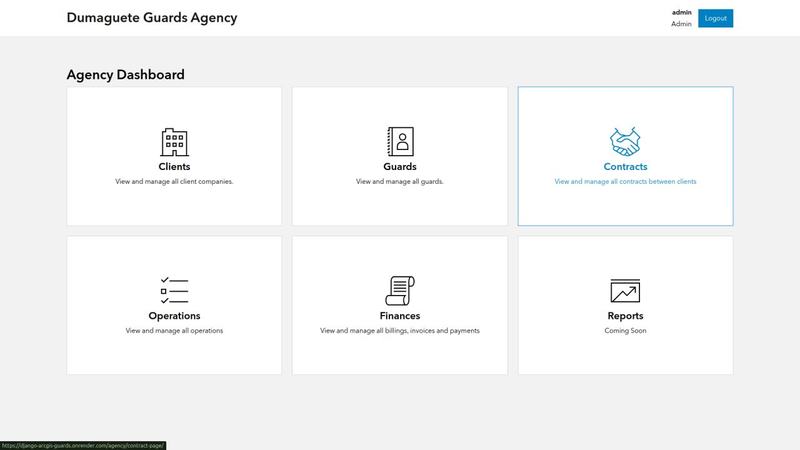
This project is an enterprise resource planning (ERP) system for security service companies, designed to centralize the operational and financial workflows involved in managing security personnel, customers, service locations, billing, and payments.
The system combines Django-based business applications with ArcGIS mapping capabilities, allowing security companies to manage their operations while also understanding where their customers, deployed personnel, and service locations are geographically distributed.
Business Use Case
Security service companies typically manage multiple customers and deploy security guards across different locations. Without a centralized system, information about personnel assignments, customer contracts, invoices, and payments can become distributed across spreadsheets, documents, and separate systems.
The ERP brings these workflows together into a single platform.
The system is designed to support:
- Customer management
- Security guard management
- Guard deployment and assignments
- Customer service locations
- Deployment schedules
- Contract and service information
- Invoice generation
- Billing management
- Payment tracking
- Operational records
- Geographic visualization
Security Guard Deployment
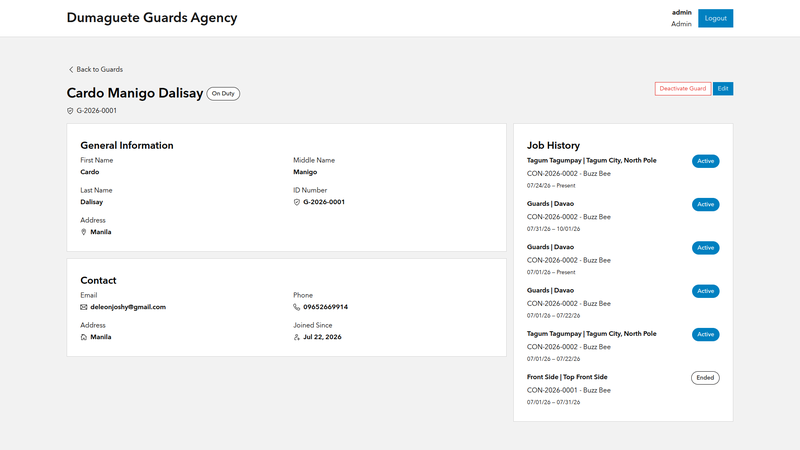
A core component of the system is security personnel deployment management.
Administrators can manage security guards and associate them with customers and specific service locations. This provides a centralized view of where personnel are assigned and helps organizations maintain clearer operational records.
The geographic component allows deployment information to be viewed spatially, providing an additional layer of context when managing customers across multiple locations.
Customer Management
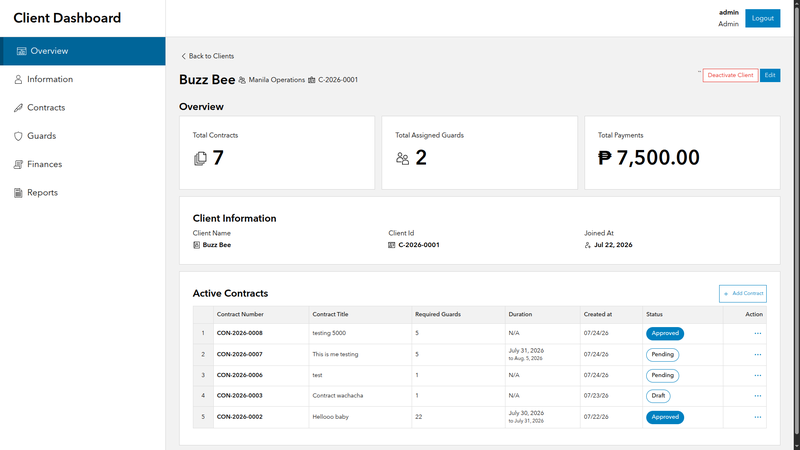
The ERP provides a centralized customer management workflow where organizations can maintain information about their clients and their associated service locations.
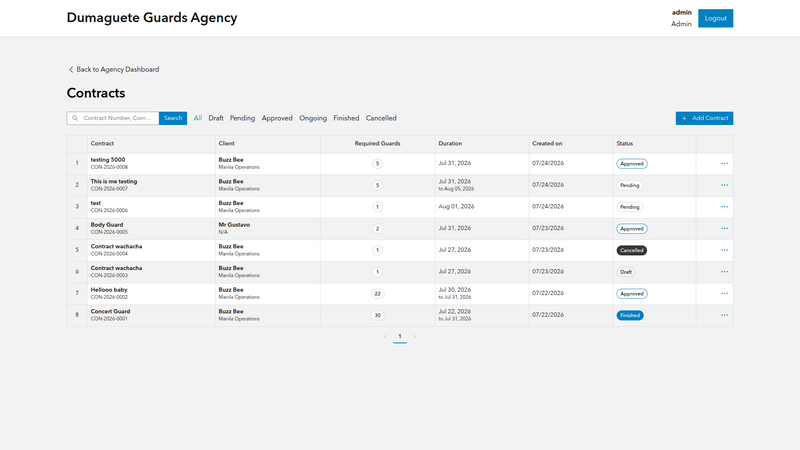
Customer records can be connected to:
Customer → Service Location → Guard Deployment → Contract / Service → Billing → Payment
GIS & ArcGIS Integration
The system integrates ArcGIS to add geographic capabilities to the ERP.
Customer and service locations can be represented spatially, allowing administrators to visualize the geographic distribution of their operations.
The map can provide context for questions such as:
- Where are our customers located?
- Which guards are deployed in a particular area?
- Which service locations are close to one another?
- How are deployments distributed geographically?
- Which areas contain the highest concentration of customers?
This demonstrates how GIS can become part of an organization's operational system rather than functioning only as a separate mapping application.
Billing, Invoicing & Payments
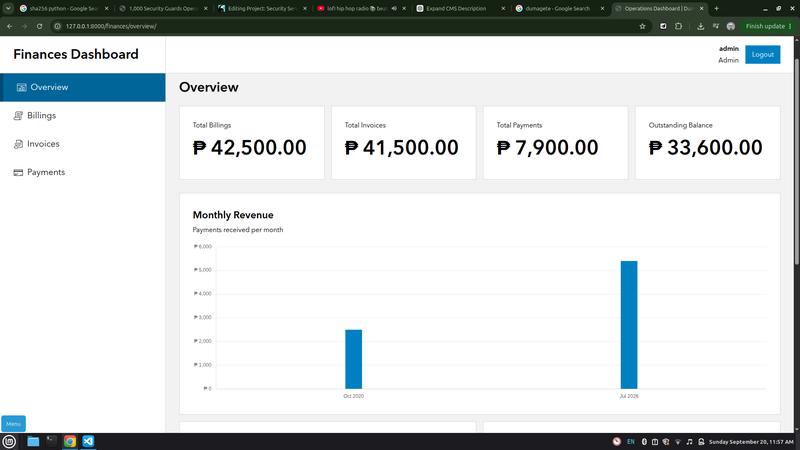
The ERP also incorporates the financial side of security service operations.
Customer services can be associated with billing records and invoices, allowing organizations to track the financial lifecycle of their accounts.
The workflow can be represented as:
Customer → Service Agreement → Invoice → Billing → Payment
This provides a centralized view of outstanding and completed financial transactions.
The system can support records for:
- Invoice creation
- Billing periods
- Service charges
- Invoice status
- Payment records
- Outstanding balances
- Customer payment history
By connecting financial information to customer and service records, the organization can maintain a clearer operational and accounting workflow.
Django Application Architecture
The backend is built using Django, providing the foundation for the ERP's business logic, authentication, database operations, and administrative workflows.
Django provides a structured environment for managing the relationships between:
Users → Guards → Customers → Locations → Deployments → Invoices → Payments
The application can therefore maintain these relationships within a centralized database rather than relying on disconnected operational records.
GIS + ERP
The combination of Django and ArcGIS demonstrates how enterprise applications can combine business information with geographic information.
The ERP is not simply a map, and the GIS component is not isolated from the business system.
Instead, geographic information becomes another dimension of the organization's operational data.
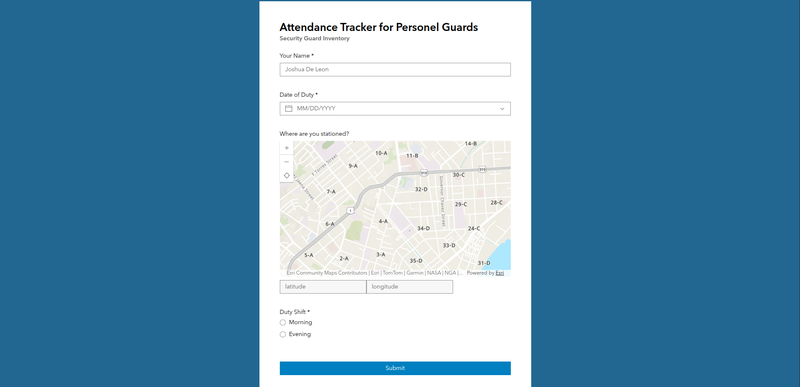
For example:
Customer: ABC Corporation
Location: Service Site
Guards: Assigned Personnel
GIS: Geographic Location
Billing: Active Service Invoice
Payment: Payment Status
This creates a more complete view of the customer relationship and operational deployment.
Technologies
- Django — ERP backend and business logic
- Python — Application development
- ArcGIS — Geographic visualization and spatial capabilities
- GIS — Customer and security deployment mapping
- Database — Centralized operational and financial records
- Web Technologies — User interface and business workflows
Project Objective
The goal of the project is to create a centralized operational platform for security service companies where personnel, customers, geographic locations, and financial transactions can be managed together.
By combining ERP functionality with GIS, the system provides both an operational and geographic view of the business.
It demonstrates how a Django application can be extended beyond conventional CRUD functionality into a business-focused enterprise system with spatial intelligence, supporting the complete workflow from customer management and guard deployment to invoicing, billing, and payment tracking.